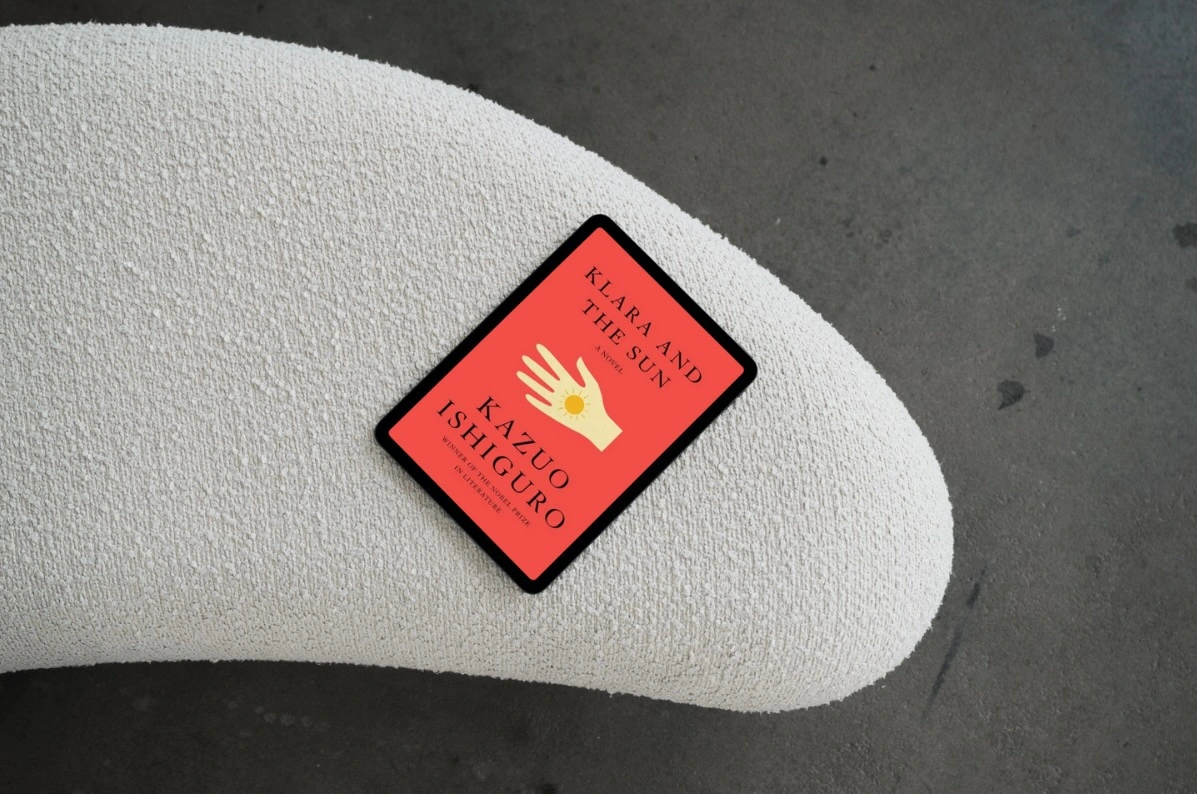

Klara and the Sun by Kazuo Ishiguro is one of those books that seems calm on the surface but ends up rearranging something in your head when you least expect it. It’s far more emotional than I anticipated. I picked it up thinking I’d get a reflective sci-fi story about artificial intelligence and loneliness, but what I found instead was a slow, gentle interrogation of what it actually means to care for someone. And that hit me harder than I expected, considering I already spend most of my waking hours as a nurse trying to do exactly that.
Klara is an Artificial Friend, a solar-powered companion built to keep children company, and she sees the world with the kind of patience most of us only manage after two weeks of meditation and a holiday from our phones. Her gaze is simple, but never shallow. She doesn’t analyze people; she studies them, quietly, as if every movement, silence, or half-smile might teach her something important about being alive. There’s something unnervingly pure about the way she loves, not because she understands emotions in the human sense, but because she believes that paying attention is enough. I found that strangely moving and almost uncomfortable because it made me realize how often I rush through care without really seeing the person in front of me.
When Klara is chosen by Josie, a sick and unpredictable girl, she doesn’t hesitate, question her role, or complain about the complexity of human emotion. She simply observes, listens, and stays. That struck me deeply. In my work, I often find myself in situations where there’s nothing left to fix, where all I can do is sit beside someone and share the silence. Reading Klara navigate that same quiet helplessness with absolute sincerity and optimism felt like a mirror held up to the parts of nursing we rarely talk about, the exhaustion, the faith, the quiet hope that being present is enough when everything else fails.
Ishiguro’s writing style is deceptively simple, which is exactly why it works. He doesn’t give you neat explanations or dramatic turning points. Instead, he leaves you in this slow drift between knowing and wondering, which feels oddly familiar if you’ve ever worked in healthcare. Life doesn’t wrap itself up neatly, and neither does this story. There were moments when I wanted to shake Klara, to tell her that people aren’t algorithms, that emotions don’t follow logic, but that’s precisely why she’s such a fascinating mirror. She sees what’s there without layering it with cynicism or assumption, and I found myself quietly jealous of that.
I read most of the book after night shifts, in that weird fog where your brain is too tired to focus but too restless to sleep. Maybe that’s why it got under my skin. The pacing is slow, almost hypnotic, but it forces you to notice what’s being said between the lines. It made me think about the way we measure worth and love in human terms, by effort, by reciprocation, by outcome, and how Klara just doesn’t. She believes that care has value on its own, even when it fails. It’s such a simple idea, yet it felt like something I’d forgotten somewhere between charts, protocols, and long nights.
And of course, I laughed at myself a few times, because there I was, a professional caregiver being humbled by a fictional solar-powered robot who worships the Sun like it’s the Wi-Fi of the universe. But that’s the charm of Ishiguro. He writes stories that slide under your skin and stay there, quietly rearranging your thoughts while pretending to be polite.
Final Thoughts
Klara and the Sun reminded me that care isn’t about fixing people or about always knowing what to do. It’s about staying, noticing, and believing that our presence still matters even when we can’t change the outcome. It reminded me that empathy isn’t a skill you perfect; it’s something you keep practicing even when you’re exhausted or uncertain. Klara’s quiet faith in kindness, her belief that love is worth the effort even when it fails, felt like a small but necessary nudge to look up from my own routines and see the people in front of me with a little more patience. It’s not a book that tries to impress you. It’s a book that quietly teaches you how to pay attention again, and maybe that’s the most human thing of all.
Should You Read It?
You should absolutely read Klara and the Sun if you like books that don’t shout their message but whisper it in ways you can’t quite ignore. It’s not a fast read, and it won’t reward impatience, but if you give it time, it starts to unfold in strange and beautiful ways. If you’ve ever worked in healthcare, education, or any job that demands empathy on tap, it will probably hit a nerve. It’s a story that understands the tired kind of compassion, the version that keeps showing up even when it doesn’t feel noble or poetic. And if you’re the type of reader who secretly enjoys overthinking what being human even means, this book will give you plenty to chew on.

Angela
I’m a mental health nurse, part time student, and full time overthinker powered by coffee and loud music. This blog started somewhere between a night shift and a creative identity crisis. It is the small corner where I park my thoughts about life, learning, books, and whatever else keeps my brain entertained.